
Premium horizontal washing equipment for architectural, coated and high-value glass. Configurations are available for delicate Triple-Silver Low-E surfaces where scratch prevention and stable drying matter.
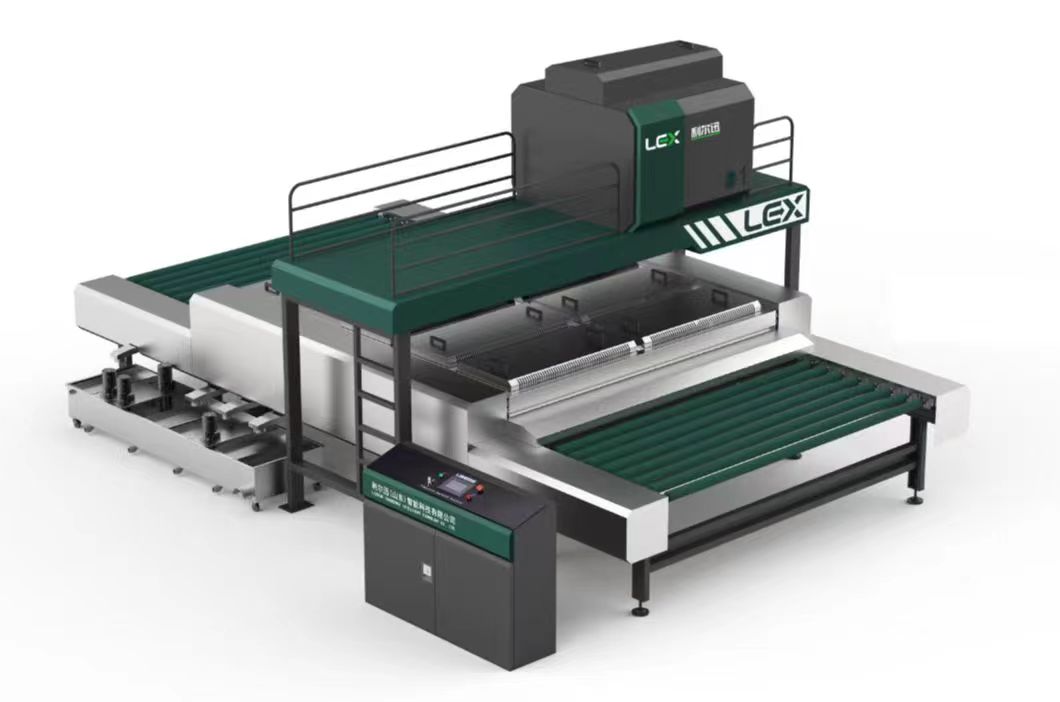
The correct model depends on your maximum glass width, coating sensitivity, thickness range and production process.
| Model | Working Width | Typical Selection Direction | Confirm Before Quotation |
|---|---|---|---|
| LEX-1700F | 1700 mm class | Architectural and coated glass with a smaller working width | Minimum size, coating type and output |
| LEX-2000F / 2500F | 2000–2500 mm class | Medium and large glass products | Thickness, line speed and downstream process |
| LEX-3000F / 3600F | 3000–3600 mm class | Large-format glass and wider production lines | Plant layout, handling method and utilities |
Minimum glass size, thickness range, speed, power, voltage, water demand, footprint and optional equipment are confirmed after reviewing the actual glass product and production target. Ask for a model-specific specification sheet before placing an order.
A horizontal washer should be selected around the glass and process, not only the maximum working width.
Surface value and handling risk influence the transport and cleaning review.
Incoming contamination and the required outgoing condition affect the cleaning process.
The washer must fit the expected output and adjacent equipment.
The exact station arrangement is finalized for the application, but a horizontal washing process normally follows these stages.
Glass enters the line with stable support and suitable spacing.
Loose contamination is prepared for the main washing stage.
Contact and cleaning parameters are reviewed for the glass surface.
Water conditions are matched to the required surface result.
Airflow is used to achieve a consistent dry surface.
Clean glass leaves the washer for inspection or the next process.
Available configurations support sensitive coated glass, including Triple-Silver Low-E.
Stainless steel and aluminum alloy construction supports long service life in wet production environments.
PLC and touch-screen control simplify parameter adjustment and operating status monitoring.
We review glass details and downstream requirements before finalizing the machine specification.
A useful quotation should define more than the machine model. Ask the supplier to confirm the project boundary and support process.
Confirm the main machine, control system, standard accessories, documentation and any items supplied by the buyer.
Review coating-sensitive cleaning, utilities, line connection, inspection and other application-specific options.
Confirm installation guidance, operator training, warranty terms, spare-parts support and remote troubleshooting.
Review the Low-E application guide or send the coating type, maximum size, thickness range and required output.